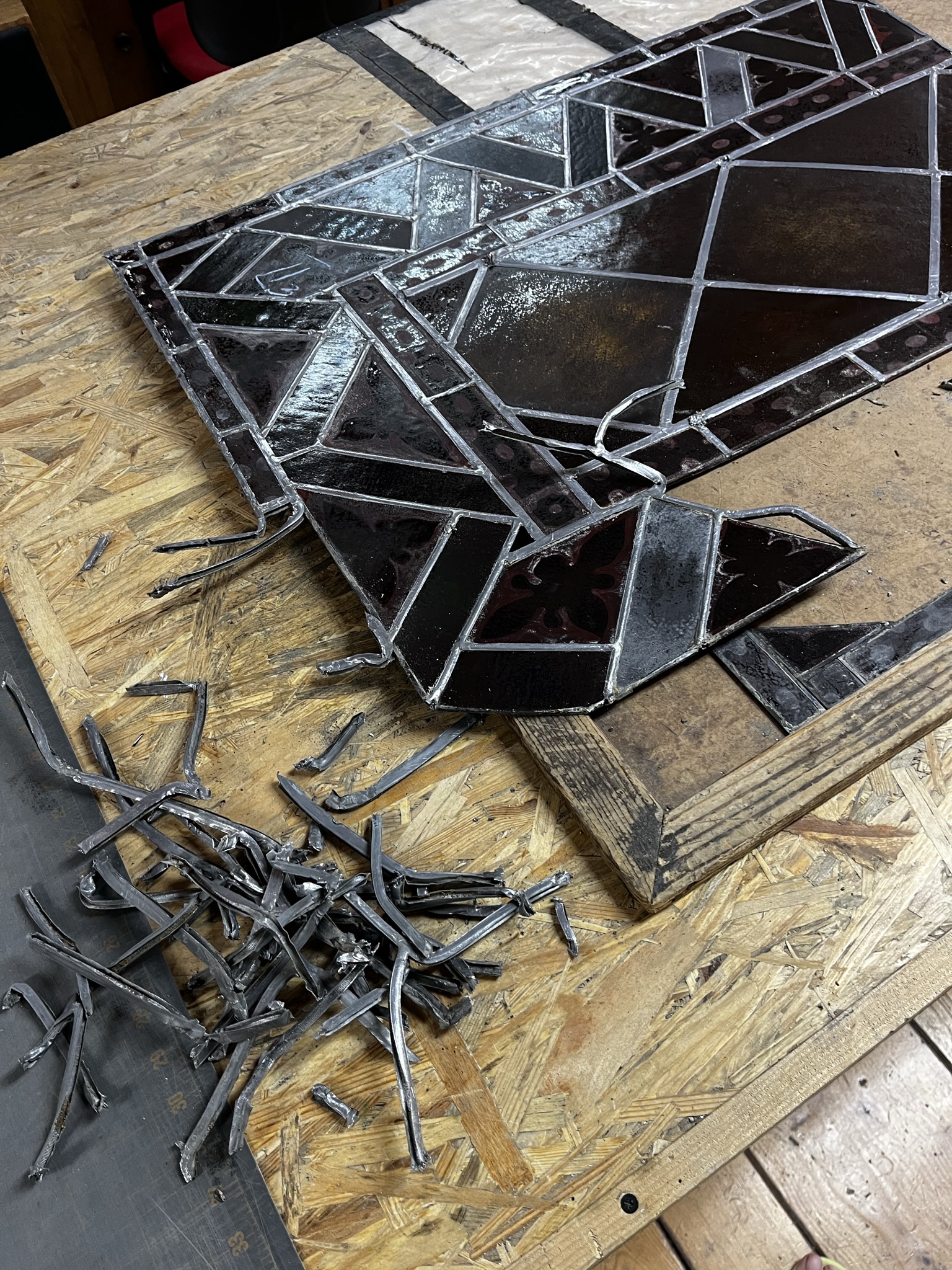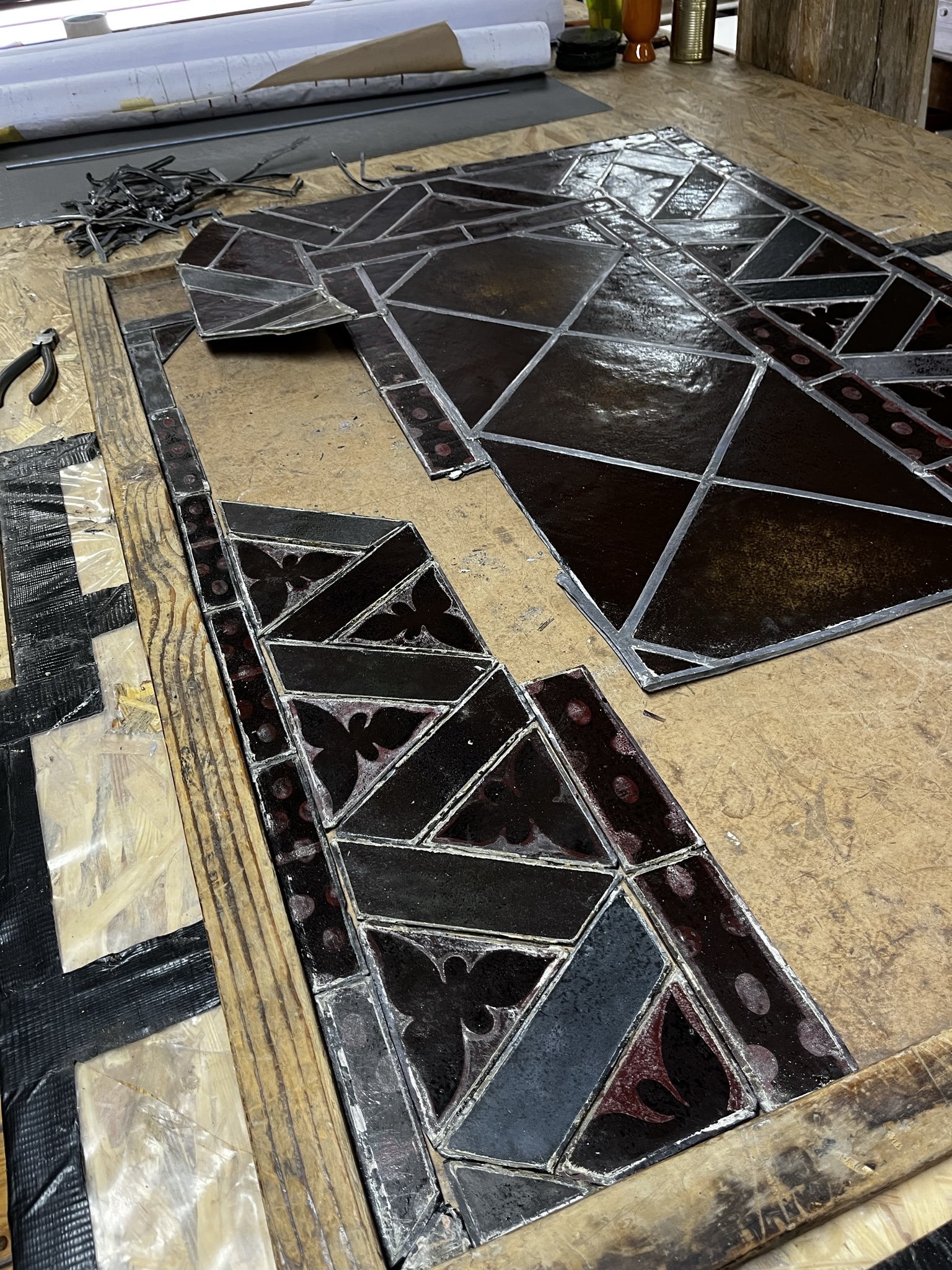
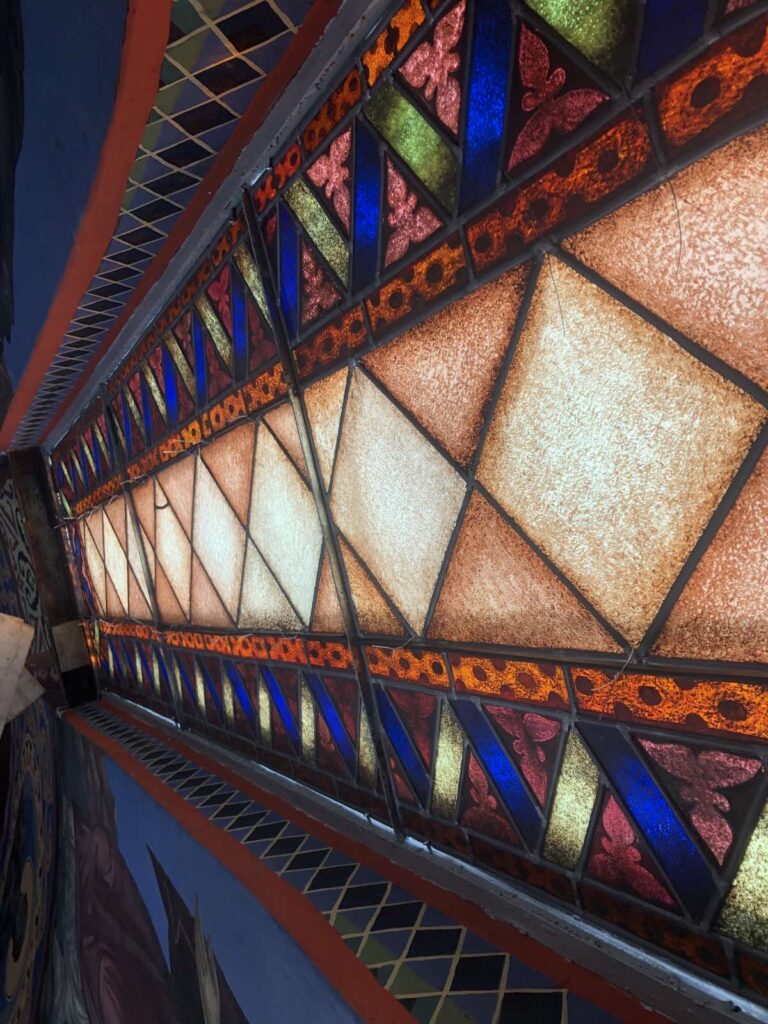
Zgrada Patrijaršije je gradjena u periodu od 1933. do 1935. godine, na osnovu projekta iz 1932. godine. Podignuta je na mestu starog, porušenog mitropolijskog dvora. Autor projekta je arhitekta ruskog porekla Viktor Lukomski. Po završetku gradnje zgrada Patrijaršije je dobila veoma povoljne ocene od strane tadašnje javnosti, a u štampi je opisana kao: impozantna velikolepna gradjevina, čiji uprošćeni neovizantijski stil odgovara sveštenom delu Beograda. Vitraži su postavljeni 1934 god i prilikom kompletne restauracije kupole prvi put su donešeni na restauraciju u atelje. Originalno su napravljeni po tradicionalnim šablonima za vreme Milana Stanišića i sinova.
The building of the Patriarchate was built in the period from 1933 to 1935, based on the project from 1932. It was built on the site of the old, destroyed metropolitan palace. The author of the project is the architect of Russian origin Viktor Lukomski. After the completion of construction, the building of the Patriarchate received very favorable reviews from the public at the time, and was described in the press as: an imposing, magnificent building, whose simplified neo-Byzantine style corresponds to the sacred part of Belgrade. Stained glass windows were installed in 1934 and during the complete restoration of the dome, they were first brought to the studio for restoration. They were originally made according to traditional templates during the time of Milan Stanišić and sons.
The architecture of the Patriarchate building represents a very complex and heterogeneous solution. According to its stylistic features, it was supposed to satisfy conservative clients, and therefore it was conceived as a free reinterpretation of the architectural heritage of the Byzantine cultural circle. The national style is presented above all in the pyramidal structure of stepped superimposed masses, arcaded niches, arches, consoles and details of plastic and painted decoration. However, the spirit of academicism is visible in the very disposition of the base and the solution to the layout of the rooms, in the three-part horizontal division of the facade zones, the regular shapes of the openings and the highlighting of the dividing crowns, and the strict use of secondary plastic. The influence of the then dominant modernist concepts is recognized in the simple neutral surfaces of the wall canvas and the characteristic rectangular windows of the top floor of the side tracts. The interior is designed representatively, but with a certain strictness, according to its function.